

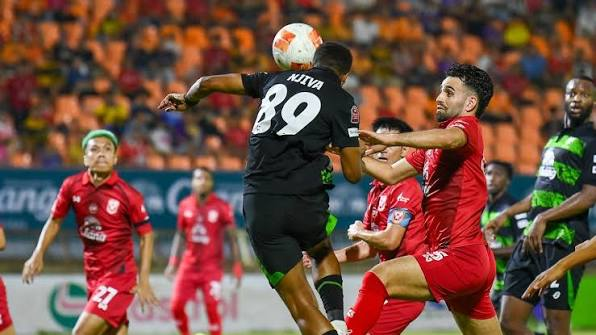
In Thai League 2017/18, some teams consistently landed on the wrong side of the handicap, burning followers even when their league position looked respectable. When you study why certain sides kept failing to cover spreads, you see repeating patterns in market perception, tactics, and game management that are far more useful than a list of team names, because the same traps keep appearing in new seasons
Why regularly losing the handicap is a meaningful red flag
A team that “loses the handicap” frequently is not just unlucky; more often, the market’s expectation for its performance is systematically too high. In a league with 3.39 goals per game and strong home scoring, favourites in Thai League 1 were often given big lines to cover, especially when facing weaker opponents. When a side repeatedly won by smaller margins than those lines required, or drew and lost in matches where pricing assumed clear superiority, the pattern signalled a gap between reputation and reality that handicappers needed to treat as a warning, not a short-term blip.
How the 2017 Thai League environment created handicap traps
The 2017 season featured a dominant champion in Buriram United and high-scoring contenders, but the rest of the league was more compressed than the table alone suggested. Public perception often treated several traditional clubs as automatic favourites based on past status rather than current underlying performance, so bookmakers could post assertive lines knowing that casual bettors would still back them. In that environment, teams with declining tactical organisation, ageing cores, or unbalanced squads were priced like old versions of themselves; they remained popular to follow, yet their matches increasingly failed to reach the margins spreads implied.
Mechanisms that make a team a handicap “loser”
Teams that habitually miss the spread tend to share several structural problems. One is defensive fragility: conceding soft goals, especially late in games, turns comfortable leads into narrow wins or draws that sit below big home handicaps. Another is inconsistent mentality, where sides switch off after gaining a lead instead of maintaining pressure, making it harder to turn –1.25 or –1.5 lines into winners. A third mechanism is tactical inflexibility: coaches who refuse to adjust against compact underdogs often see their teams dominate possession without creating enough clear chances, leaving scorelines stuck at 1–0 or 2–1 when markets were built on more decisive victories.
Conditional scenarios where even good teams fail to cover
Even strong sides can repeatedly lose handicaps in particular conditions. When schedule congestion forces rotation, or when key forwards are missing, teams that still receive large negative lines may win more slowly and cautiously, making their historical covering record temporarily unreliable. Weather and pitch issues can also compress scoring margins, especially for possession-heavy favourites, because slow surfaces and fatigue undermine their usual intensity. Recognising those conditions before blindly following a big name helps you avoid mistaking a high-probability win for a high-probability cover.
Structural profiles of teams that burn handicap followers
Because detailed 2017 handicap records are not readily available, you have to infer likely handicap underperformers from performance statistics and style. Sides that combined high public visibility with only moderate goal difference, frequent draws, or many narrow wins are prime suspects: their results looked decent, but not strong enough to justify the spreads they were regularly asked to clear. Similarly, clubs with leaky defences often conceded equalising or consolation goals that turned comfortable handicaps into pushes or losses for –1.0 and –1.25 backers, even when they still collected three points in the table.
A typical indicator pattern includes:
- Strong historical brand or fanbase but only modest positive goal difference.
- Frequent 2–1 or 1–0 wins when the market expected more decisive margins.
- Above-average goals conceded despite being priced as clear favourites.
When these signs cluster, you are likely dealing with a team whose name and narrative drive lines more than its actual, current dominance.
Using a comparison table to classify handicap risks
To make this easier to apply in practice, it helps to classify Thai League teams into risk archetypes based on their relationship with handicaps instead of their league finishing position. Doing so clarifies which types tend to hurt followers and in what way.
| Archetype | Behaviour vs Handicap | Main Risk to Bettors |
| Overhyped fragile favourite | Wins, but fails to clear big lines | Reputation inflates spreads beyond true level |
| Inconsistent attacking side | Alternates big wins and flat performances | High variance; unpredictable covering pattern |
| Weak defensive mid-table team | Concedes often, even vs weaker opposition | Late goals and equalizers kill –handicaps |
| Underestimated balanced side | Often covers +handicaps | Risk mainly for those opposing them |
The first three archetypes are the ones most likely to “lose the price” repeatedly; they attract bets because of name value, highlight reels, or occasional big wins, but their weekly performance is too uneven or fragile to justify the spreads the market offers. Understanding which category a team currently fits matters far more than simply knowing whether it is “good” or “bad” in the table.
Where UFABET fits when dealing with handicap-risk teams
When you already recognise that certain Thai League teams frequently underperform their handicap, the question is how to react across different operators. In situations where you want either to oppose those teams on large negative lines or to avoid them altogether, some bettors compare which betting destination gives them the cleanest choice of alternative handicaps—sometimes preferring smaller positive lines for the underdog, or choosing to lay favourites in specific ways. Within that landscape of options, ufa168 can be treated as one of the platforms where you manage exposure to these risky favourites, either by selectively opposing them or by steering your bets toward matches where your handicap read is clearer; the real protection comes from your willingness to question reputation and pricing, with the interface simply serving as the tool through which that discipline is applied.
How casino online play contrasts with managing handicap risk
Evaluating which Thai League teams are dangerous to follow against the handicap is a risk-management exercise grounded in probability, style, and pricing. In a separate part of the gambling ecosystem, a casino online setting offers games whose odds are fixed by house design, making it impossible to “avoid bad teams” in the same way, because the negative expectation is embedded in every spin or hand. For a bettor trying to avoid recurring handicap traps, it is important to keep that difference clear: in football markets, you can protect yourself by being selective and by fading fashionable, overpriced teams; in casino games, there is no equivalent structural mispricing to exploit, so discipline must come from limits rather than from smarter selection.
List: practical red flags before you follow a favourite on the handicap
To move beyond vague warnings, you can use a small pre‑match checklist of red flags that suggest a favourite is more likely to lose the handicap than to reward followers. Each item connects a specific pattern to a clear risk, instead of relying on general advice like “don’t chase big names.”
Watch for these warning signs:
- Line too large for goal difference: The team is priced at –1.0 or worse despite only a modest average margin of victory over the season.
- Leaky defence: They concede in most games, including against weaker sides, increasing the chance late goals damage the spread.
- Recent narrow wins vs weaker opposition: Results like repeated 1–0 or 2–1 home wins when coupons suggested easier victories.
- Key attackers missing: Injuries or rotation among forwards and creators, but the handicap still looks as if the strongest XI will play.
- Motivation or schedule doubts: Situations where focus may drop—mid-table safety, cup distractions, or heavy fixture congestion.
The interpretation is that when several of these flags appear together, you should either avoid backing the favourite against the handicap or consider positions on the underdog instead. The goal is not to never follow big teams, but to recognise when their price reflects an idealised version of their performance that recent evidence does not support.
Summary
In Thai League 2017/18, teams that frequently lost the handicap were typically those whose reputation, attacking highlights, or historical success inflated lines beyond what their current structures and performances justified. By classifying these sides into risk archetypes, tracking red-flag indicators like fragile defences, modest goal differences, and oversized spreads, and staying willing to step aside or oppose them when pricing runs ahead of reality, handicap bettors can avoid some of the most common traps that arise when “following” popular teams without checking whether they are truly beating the line on the pitch.
